How Do You Know the Demographic of Voters
JOSEPH PREZIOSO // Getty Images
Voter demographics of every country
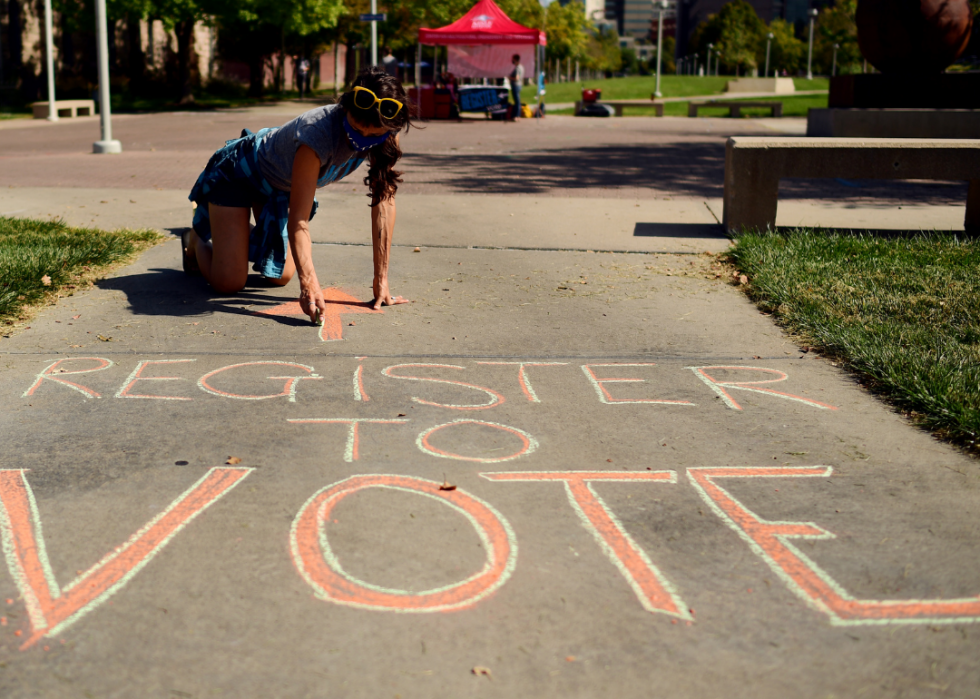
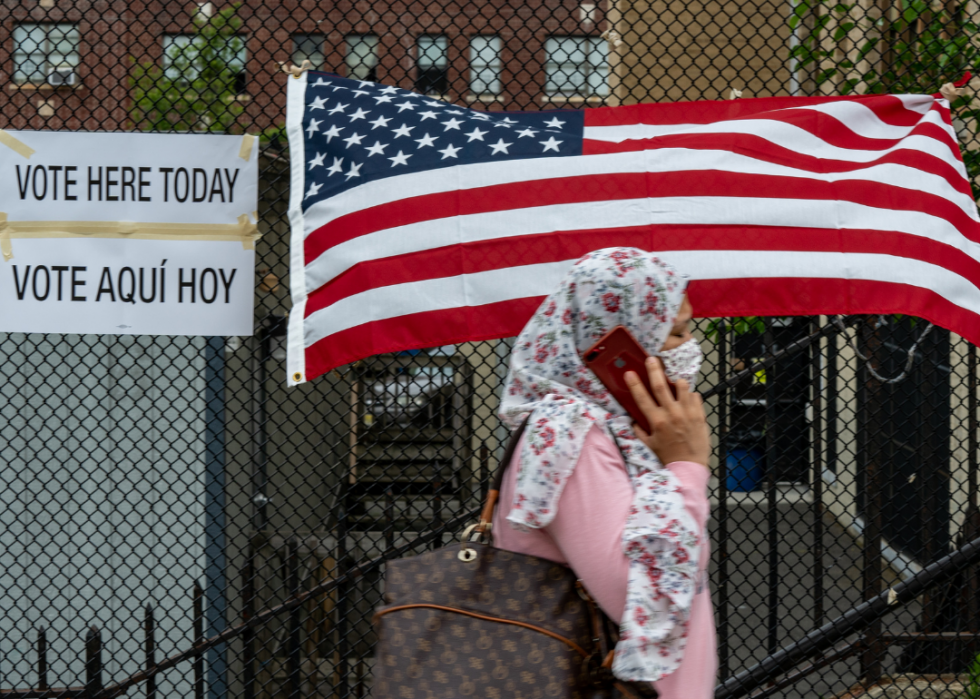
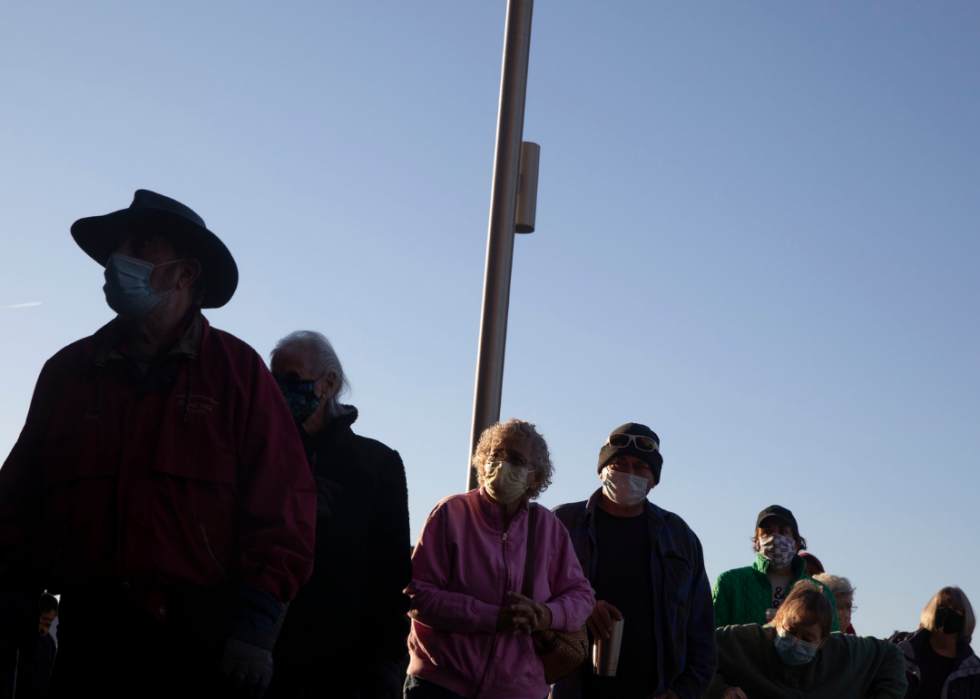
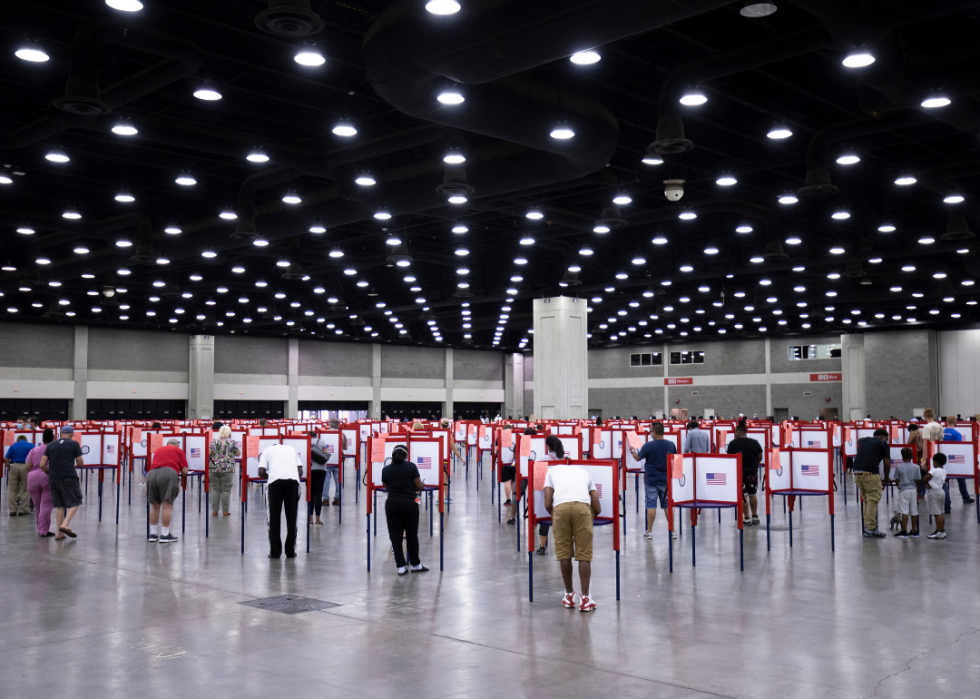
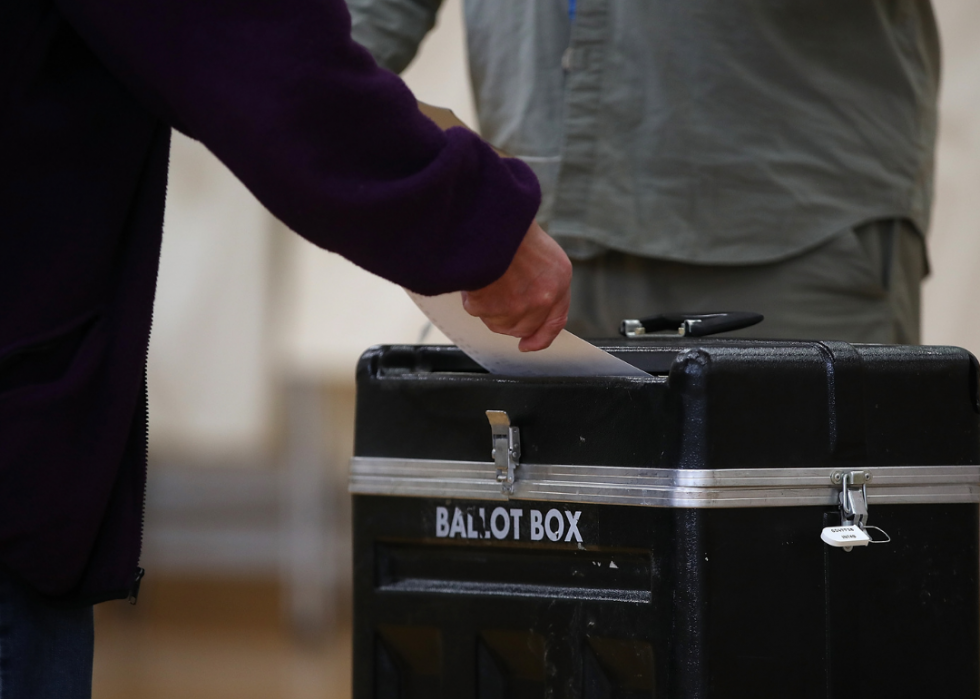
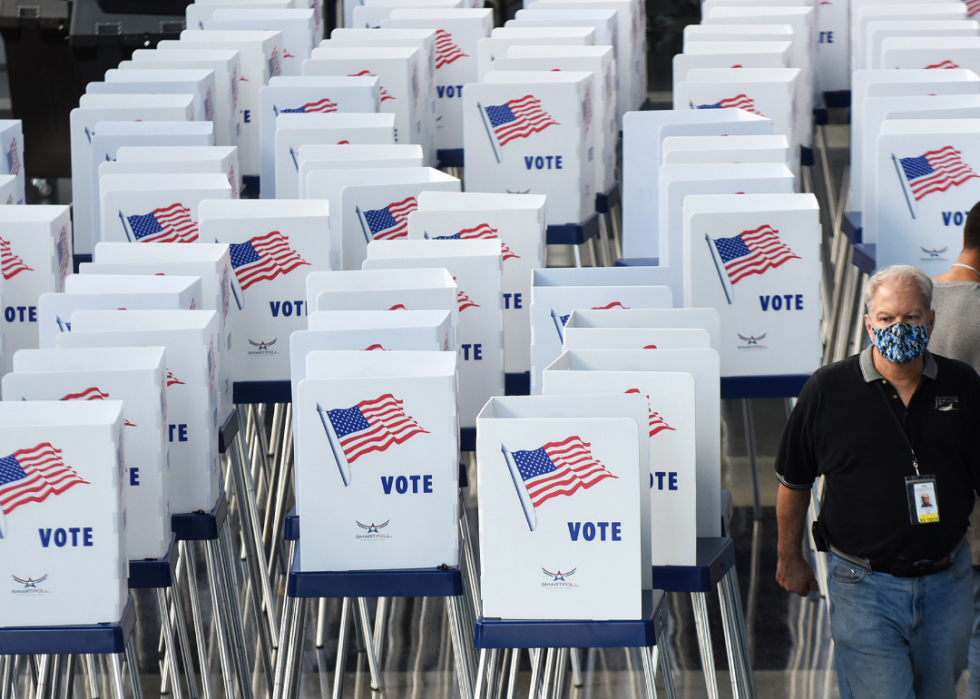
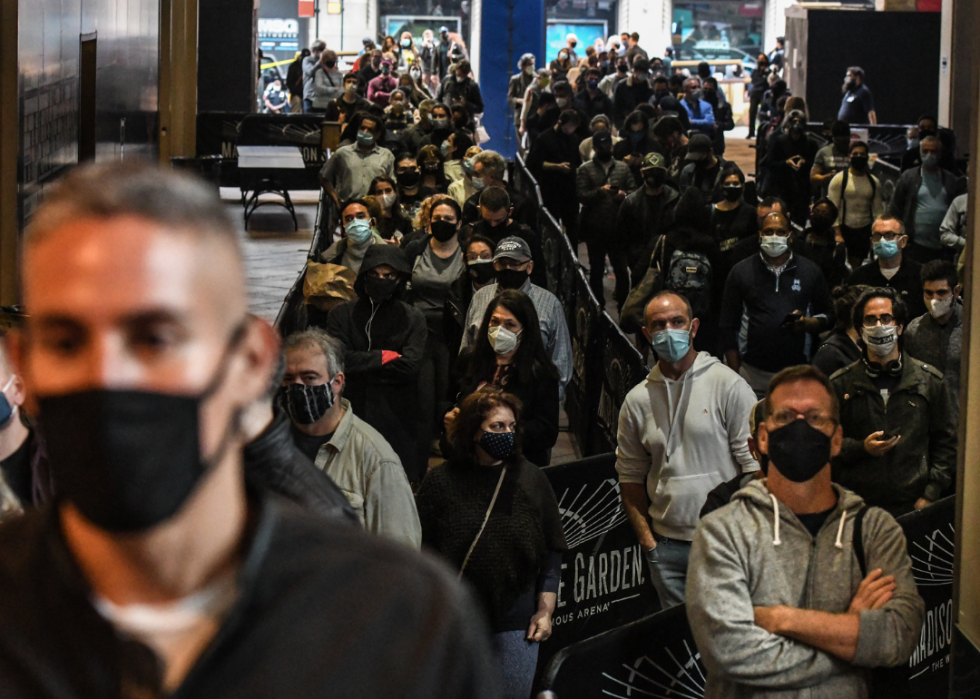
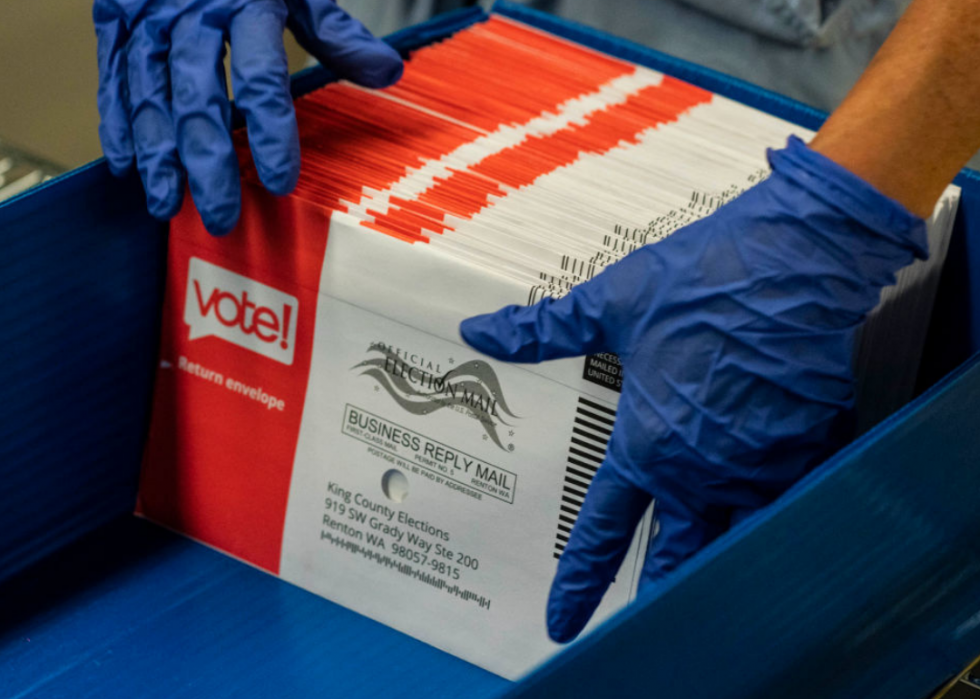
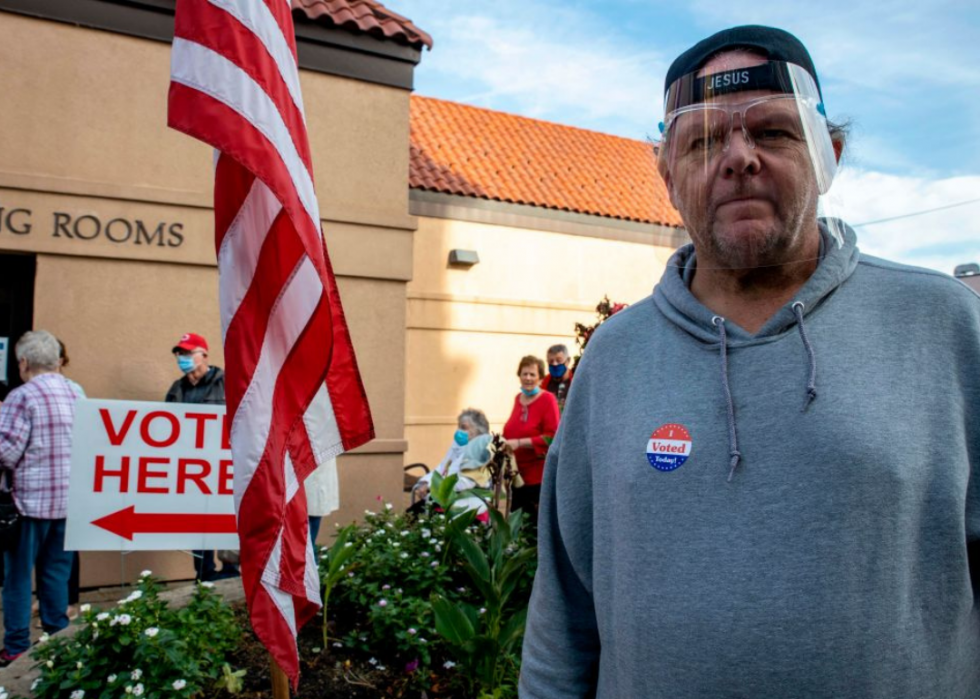
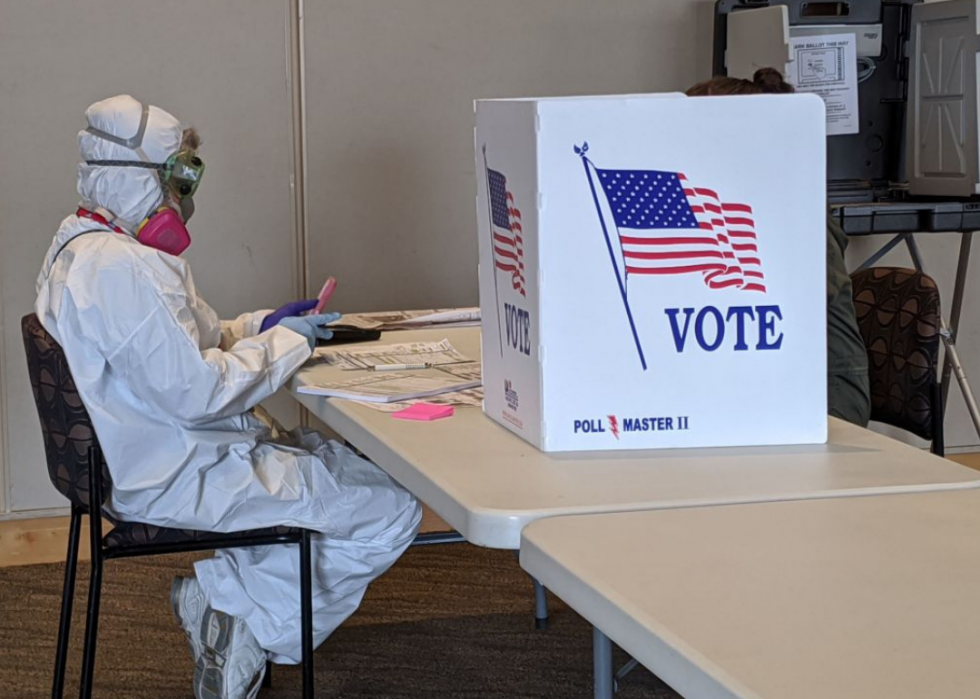
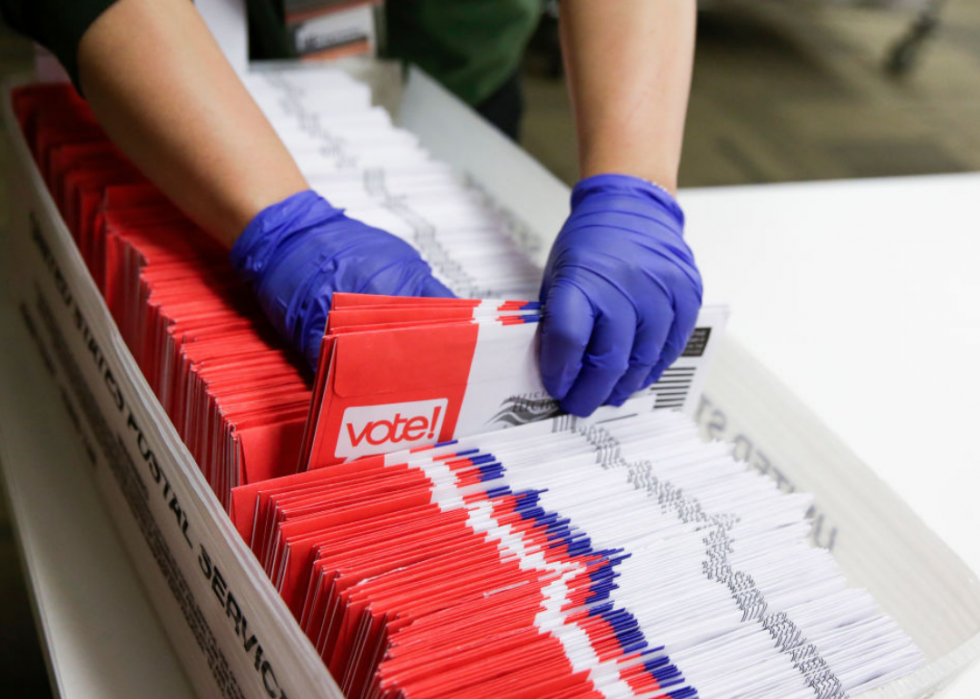
In 2020, 158.4 million citizens—almost two-thirds of estimated eligible voters—voted in the presidential elections, co-ordinate to the Pew Research Center. The number represented a higher than average turnout, with people voting in numbers not seen since 1980 and possibly well earlier.
Stacker compiled voter demographics for each land and Washington, D.C., using the 2019 U.S. Census Bureau's American Customs Survey (released in September 2020). Each slide shows the state'south voting-eligible population (citizens who are 18 or older) and the breakdown of that population by sexual activity, historic period, race, and education. Economic statistics are not included because the American Community Survey does not account for COVID-19, which affected unemployment, poverty, and medical insurance condition for millions of Americans. In society to avoid making whatever assumptions about the data or the participants of the American Customs Survey, Stacker used the exact diction of the "race" and "sex activity" framework that was provided in the census data.
By percentage, voters anile 45–64 are the highest in every land, with registered voters over the age of 45 comprising more than than half the country's population. Older voters also trend toward turning out to vote at a higher rate and played a significant role in former President Donald Trump's 2016 victory in Florida.
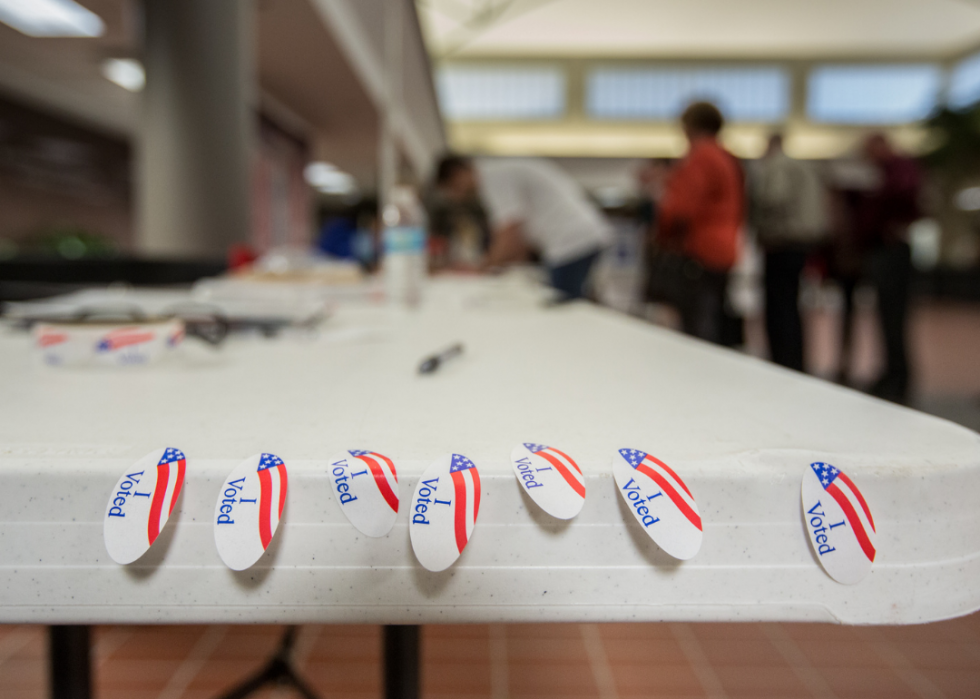
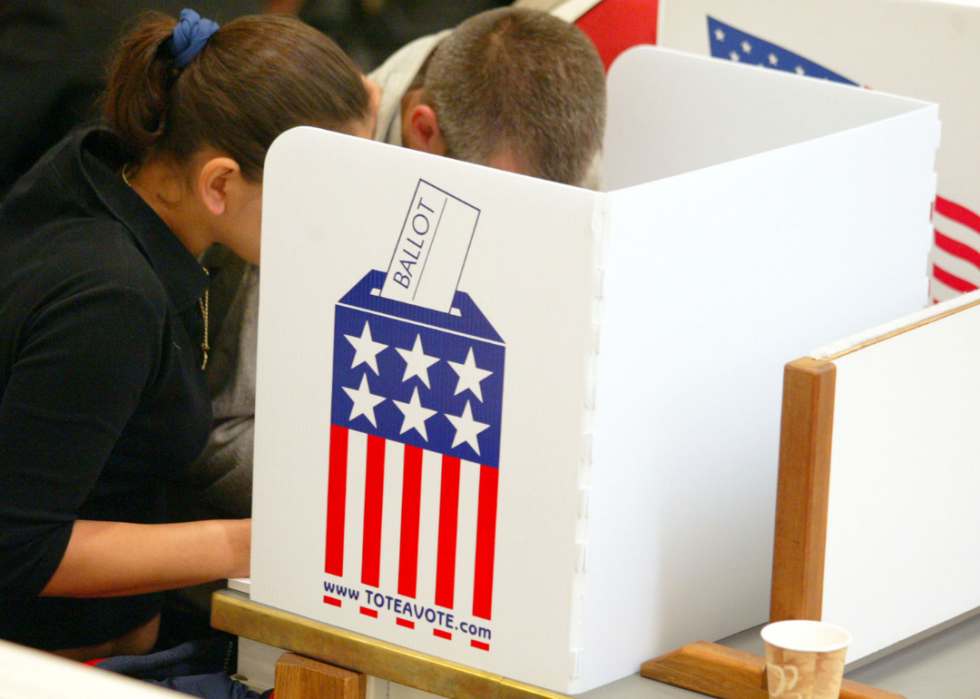
Along racial lines, Black or African American voters in Louisiana and Georgia contain more than than 30% of the state's registered voters. California and Texas—which award the near electoral votes at 55 and 38, respectively—avowal the highest numbers of Latino voters. On the other stop of the spectrum, West Virginia and Maine boast the highest percent of white voters. A number of states had already seen record voter turnouts, with 16 seeing more than half of its registered voters casting a ballot before Election Solar day.
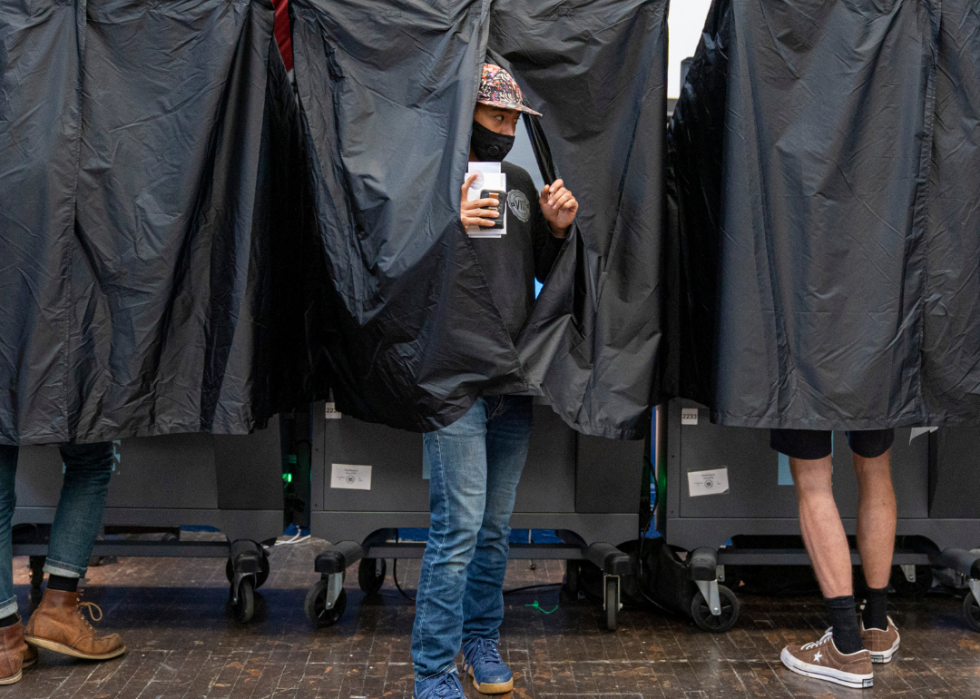
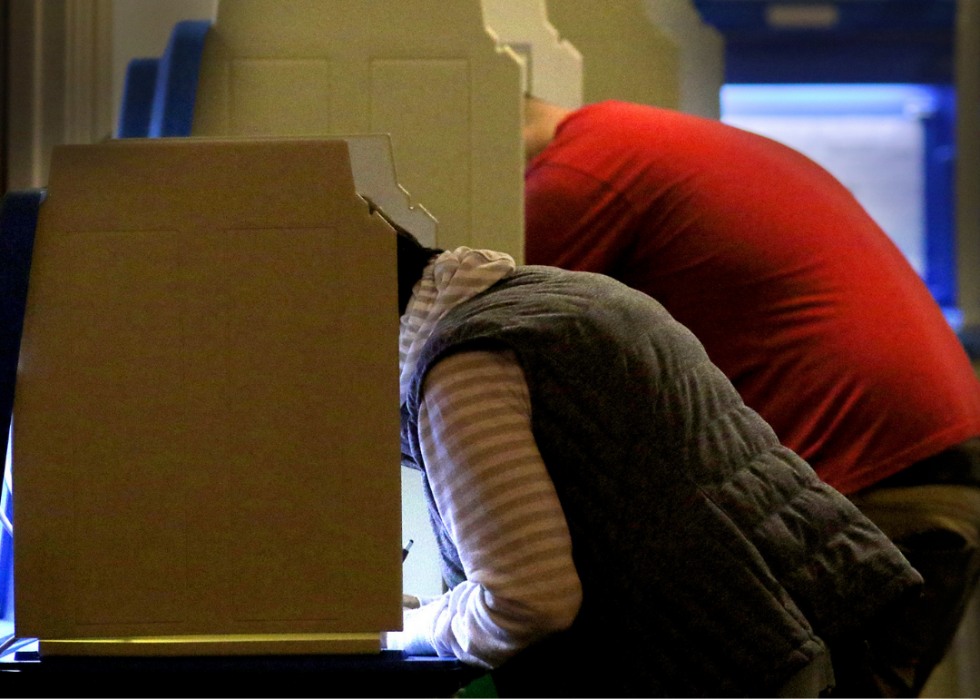
Continue reading for a glimpse into the voter demographics of every country.
You may besides like: Major paper headlines from the year yous were built-in
1 / 51
Alabama
- Voting-eligible population: 3,731,336
- Breakup past sexual activity: 47.4% male, 52.6% female
- Breakdown past age: 20.five% 18-29 years old, 23.5% thirty-44 years old, 33.three% 45-64 years onetime, 22.8% 65+ years old
- Breakdown by race: 69.nine% White, 26.7% Black or African American, 0.9% Asian, 2.2% Hispanic or Latino, 0.0% Native American or Alaska Native, 0.0% Native Hawaiian or Pacific Islander, ane.iii% two or more races
- Breakdown by education: three.1% less than loftier school education, 9.2% some high school (no diploma), 31.vi% high school graduate or equivalency, 23.5% some college (no degree), 8.6% associate'southward degree, 15.2% bachelor'due south caste, 8.9% graduate or professional person degree
Based on the 2018 gubernatorial race in Alabama, counties with a higher number of minorities favored the Democratic ticket, while voters 40 and older preferred the GOP ballot. Education level reportedly has nothing to practise with how Alabamians voted in the election 2 years agone.
ii / 51
John Moore // Getty Images
Alaska
- Voting-eligible population: 533,151
- Breakdown by sex: 52.2% male, 47.eight% female
- Breakdown by age: 23.2% 18-29 years erstwhile, 27.0% 30-44 years erstwhile, 33.ane% 45-64 years erstwhile, xvi.vii% 65+ years onetime
- Breakdown by race: 68.6% White, iii.iii% Black or African American, v.0% Asian, 6.0% Hispanic or Latino, 0.0% Native American or Alaska Native, 1.2% Native Hawaiian or Pacific Islander, 5.8% two or more than races
- Breakup by education: 1.7% less than loftier school pedagogy, 5.3% some high school (no diploma), thirty.2% high schoolhouse graduate or equivalency, 27.4% some college (no caste), viii.4% associate's degree, 16.viii% bachelor'southward degree, x.3% graduate or professional degree
Along with Alaska's old governor, Sarah Palin, current Vice President of the United States Kamala Harris was one of only three women ever nominated for the role. (In January 2021, Harris became the outset female person vice president of the United States.) Palin was chosen aslope candidate John McCain, while Geraldine Ferraro teamed with Walter Mondale in 1984. In the last ii presidential elections, Alaskan voters preferred the Republican candidate over the Democrat contender past less than 15%.
3 / 51
Ralph Freso // Getty Images
Arizona
- Voting-eligible population: 5,137,474
- Breakup by sex: 49.3% male, l.7% female person
- Breakup by age: 21.8% 18-29 years former, 23.i% 30-44 years one-time, 30.6% 45-64 years old, 24.5% 65+ years one-time
- Breakdown by race: 81.one% White, 4.7% Black or African American, 2.v% Asian, 24.0% Hispanic or Latino, 4.6% Native American or Alaska Native, 0.2% Native Hawaiian or Pacific Islander, 2.9% two or more races
- Breakdown by education: 3.0% less than high school education, 7.i% some high school (no diploma), 25.2% high schoolhouse graduate or equivalency, 27.4% some college (no degree), eight.7% associate'due south degree, 18.3% bachelor'south degree, 10.3% graduate or professional degree
The highest percentage of voters in Arizona are white, betwixt the ages of 45-64 years one-time, and almost equally divided past each gender. As a whole, Arizona has participated in 27 presidential elections since 1912, and in that fourth dimension, the Grand Canyon State selected the winning presidential candidate 77.78% of the time.
4 / 51
MICHAEL B. THOMAS // Getty Images
Arkansas
- Voting-eligible population: ii,235,415
- Breakup by sex: 48.1% male, 51.nine% female
- Breakdown by age: 20.7% 18-29 years old, 23.half-dozen% 30-44 years old, 32.iv% 45-64 years erstwhile, 23.3% 65+ years sometime
- Breakdown by race: 79.vii% White, 15.5% Black or African American, ane.1% Asian, 3.9% Hispanic or Latino, 0.0% Native American or Alaska Native, 0.1% Native Hawaiian or Pacific Islander, ane.8% two or more than races
- Breakdown by education: 3.4% less than high school teaching, 7.9% some high school (no diploma), 35.1% high school graduate or equivalency, 24.5% some college (no degree), 7.4% associate'southward caste, 14.five% bachelor's caste, 7.3% graduate or professional degree
Arkansas voters are continuing in line for longer than ever before to cast their ballot, with some counties seeing record turnouts, compared to the 2012 and 2016 presidential elections. Pulaski, the land's most massive county populace of more than 391,000 with over 250,000 registered voters, tripled the number of absentee ballot requests for the 2020 election compared to 2016.
five / 51
Allen J. Schaben // Getty Images
California
- Voting-eligible population: 26,032,160
- Breakdown by sex: 49.1% male, l.9% female
- Breakdown by age: 22.9% 18-29 years erstwhile, 25.0% 30-44 years quondam, 31.4% 45-64 years old, xx.7% 65+ years old
- Breakdown by race: 63.iv% White, half dozen.vii% Black or African American, 14.iii% Asian, xxx.9% Hispanic or Latino, 0.9% Native American or Alaska Native, 0.4% Native Hawaiian or Pacific Islander, 4.ane% two or more races
- Breakdown by education: four.6% less than loftier school instruction, 6.iii% some high school (no diploma), 21.ix% loftier school graduate or equivalency, 25.one% some higher (no caste), 8.2% associate'due south degree, 21.viii% bachelor's degree, 12.1% graduate or professional degree
Famous for being blue and giving its U.S.-leading 50+ balloter votes to every Democratic presidential nominee since 1992, the Gold State has 20.nine million registered voters. The percentage of registered voters increased past ten% since 2016 in California, which has one of the lowest rates of prominent white voters, while male and female electoral proportions are nearly equal, on average.
You may likewise like: Political cartoons from the final 100 years
6 / 51
Hyoung Chang/MediaNews Group/The Denver Mail // Getty Images
Colorado
- Voting-eligible population: 4,244,210
- Breakdown by sex: 50.2% male person, 49.8% female person
- Breakdown by age: 21.9% 18-29 years old, 26.eight% 30-44 years old, 31.7% 45-64 years old, nineteen.6% 65+ years sometime
- Breakup past race: 86.vii% White, 4.0% Black or African American, two.vi% Asian, 16.5% Hispanic or Latino, 1.0% Native American or Alaska Native, 0.0% Native Hawaiian or Pacific Islander, 3.0% two or more races
- Breakup by educational activity: 2.0% less than loftier school education, 4.7% some high schoolhouse (no diploma), 22.two% loftier school graduate or equivalency, 22.9% some higher (no degree), viii.ii% associate'southward caste, 25.vii% bachelor'due south caste, 14.5% graduate or professional degree
When information technology comes to voters who have a graduate or professional degree, Colorado locals averaged a higher pct than many other states in 2020. Colorado is 1 of the healthiest states to live in—and xix.6% of voters in the land are higher up the age of 65.
7 / 51
Spencer Platt // Getty Images
Connecticut
- Voting-eligible population: 2,619,474
- Breakdown by sex activity: 47.9% male, 52.i% female person
- Breakdown by historic period: xix.viii% eighteen-29 years erstwhile, 21.3% 30-44 years one-time, 35.6% 45-64 years quondam, 23.3% 65+ years old
- Breakdown past race: 79.half-dozen% White, 10.5% Black or African American, 3.3% Asian, 12.6% Hispanic or Latino, 0.0% Native American or Alaska Native, 0.0% Native Hawaiian or Pacific Islander, 2.four% two or more races
- Breakdown by education: 2.seven% less than high schoolhouse education, 5.5% some high schoolhouse (no diploma), 27.iv% high school graduate or equivalency, 19.7% some college (no degree), 7.v% associate'due south degree, 21.6% bachelor's degree, 15.eight% graduate or professional degree
Almost xvi% of Connecticut voters have a graduate or professional caste, backside only Washington, D.C., Maryland, and Massachusetts for the highest percent in the land. The Constitution State has more than 2.6 million eligible voters—more than women than men by 4.2%—earning it 7 electoral votes.
8 / 51
David Dee Delgado // Getty Images
Delaware
- Voting-eligible population: 725,178
- Breakdown past sex: 47.5% male, 52.5% female
- Breakdown past age: 19.one% 18-29 years onetime, 21.ii% thirty-44 years onetime, 34.0% 45-64 years old, 25.eight% 65+ years old
- Breakdown by race: 72.4% White, 21.7% Black or African American, two.v% Asian, 5.8% Hispanic or Latino, 0.0% Native American or Alaska Native, 0.0% Native Hawaiian or Pacific Islander, i.viii% two or more races
- Breakdown by education: 2.0% less than high school educational activity, 6.4% some loftier school (no diploma), 31.1% loftier school graduate or equivalency, 22.one% some higher (no degree), seven.nine% acquaintance's caste, 18.5% bachelor'south degree, 12.2% graduate or professional degree
Breaking downwards voting demographics by sex shows that women in Delaware surpass men by v%, revealing the female voter's influence in the state, as seen in the League of Women Voters' present Vote411.org campaign. However, although considered a moderately liberal government, Delaware voters essentially voted equally for both political parties in all presidential elections since 1900.
9 / 51
Joe Raedle // Getty Images
Florida
- Voting-eligible population: fifteen,507,315
- Breakdown by sex: 48.i% male person, 51.nine% female person
- Breakup by age: 18.3% 18-29 years former, 21.vi% 30-44 years old, 32.5% 45-64 years old, 27.6% 65+ years old
- Breakdown by race: 77.8% White, xv.0% Blackness or African American, ii.three% Asian, 20.8% Hispanic or Latino, 0.3% Native American or Alaska Native, 0.1% Native Hawaiian or Pacific Islander, 2.0% two or more than races
- Breakdown past pedagogy: 3.2% less than high schoolhouse education, seven.ii% some high school (no diploma), 28.7% loftier school graduate or equivalency, 21.vii% some college (no degree), 10.3% acquaintance'south degree, 18.v% bachelor's degree, x.5% graduate or professional degree
Florida'south breakdown of voter demographics by race reveals the Sunshine State'due south diversity compared to other U.S. regions with its high Latino population of twenty.8%. The racial vote is imperative to all elections, presidential or other, with 2020'south records showing Latinos comprise 17% of all Florida voters, making their ballots essential for a win.
10 / 51
Elijah Nouvelage // Getty Images
Georgia
- Voting-eligible population: 7,581,837
- Breakup past sexual practice: 47.4% male person, 52.6% female
- Breakup past age: 22.1% 18-29 years old, 24.7% 30-44 years old, 33.5% 45-64 years one-time, 19.vii% 65+ years old
- Breakdown by race: 60.9% White, 32.9% Blackness or African American, 2.9% Asian, 5.0% Hispanic or Latino, 0.3% Native American or Alaska Native, 0.0% Native Hawaiian or Pacific Islander, one.7% two or more races
- Breakdown by education: 2.viii% less than high school education, 8.one% some high school (no diploma), 28.7% high school graduate or equivalency, 22.ix% some college (no caste), 7.7% associate'due south caste, 18.8% bachelor's degree, 11.0% graduate or professional degree
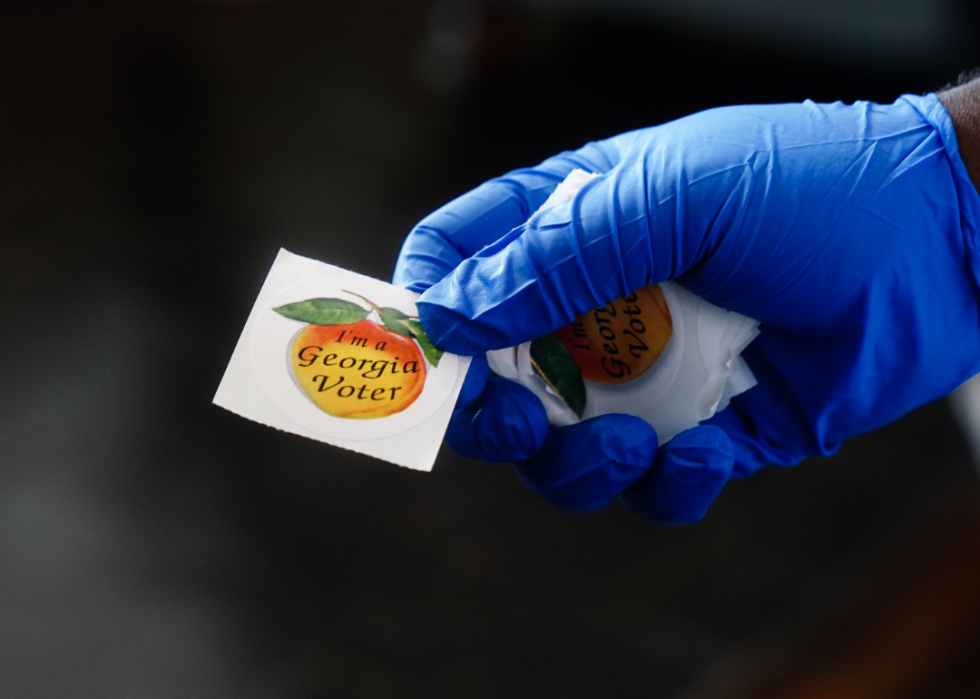
Like Florida'southward high Latino voting population, Georgia'southward high percentage of Blackness or African American voters reveal a strong racial influence compared to other U.S. regions. African American voters command a large percentage of the country'southward overall tally, which was critical to the 2020 election since Georgia already reportedly saw its most massive poll turnout in a country notorious for voter suppression. With v.ii% more than female voters than males, African American women were reportedly a force to reckon with in that ballot.
Yous may also like: States with the highest and lowest Trump approval ratings
11 / 51
Trevor Bexon // Shutterstock
Hawaii
- Voting-eligible population: one,014,035
- Breakdown by sex: 50.v% male person, 49.5% female
- Breakup by age: 19.7% eighteen-29 years former, 24.4% thirty-44 years old, 31.0% 45-64 years quondam, 24.8% 65+ years old
- Breakdown by race: 27.5% White, 2.1% Black or African American, twoscore.0% Asian, 8.8% Hispanic or Latino, 0.0% Native American or Alaska Native, 9.2% Native Hawaiian or Pacific Islander, 19.1% ii or more races
- Breakdown by education: ii.half dozen% less than high school pedagogy, three.viii% some high schoolhouse (no diploma), 29.i% high school graduate or equivalency, 22.6% some higher (no degree), 10.2% associate's caste, 21.0% bachelor's degree, 10.viii% graduate or professional degree
With the everyman per centum of white voters in the U.S., Hawaii'south Asian American population makes up the largest per centum of voters, followed by Hispanic groups and Native Hawaiian or Pacific Islanders. With its four electoral votes, Hawaii's population features almost 20% of voters who are of ii or more than races; however, the Asian American majority is reportedly the fastest-growing racial contingent in the U.Due south. electorate.
12 / 51
JEFF KOWALSKY // Getty Images
Idaho
- Voting-eligible population: one,282,630
- Breakup by sex: 49.6% male, 50.4% female
- Breakup by historic period: 21.ii% xviii-29 years old, 24.nine% 30-44 years former, 31.six% 45-64 years old, 22.two% 65+ years old
- Breakdown by race: 91.9% White, 0.5% Black or African American, 1.0% Asian, 8.6% Hispanic or Latino, 0.0% Native American or Alaska Native, 0.0% Native Hawaiian or Pacific Islander, 2.iii% ii or more races
- Breakdown past pedagogy: 1.8% less than loftier schoolhouse instruction, v.9% some high schoolhouse (no diploma), 27.5% high schoolhouse graduate or equivalency, 27.ix% some college (no caste), 10.3% associate's degree, 17.8% bachelor'due south caste, 8.viii% graduate or professional degree
Predominantly made upwards of a white voter population, the Jewel State has voted GOP 70% of the fourth dimension since 1900. The rather cherry state reported a record turnout in the 2020 primary with upwardly to 38% voting, a number unseen since the 1980 election at a little less than 31%. The 2016 Electorate'southward Idaho Profile revealed a tied voting population betwixt balloters ages 18–44 and voters between 45–65.
13 / 51
Scott Olson // Getty Images
Illinois
- Voting-eligible population: 9,088,036
- Breakup by sexual activity: 48.3% male, 51.vii% female
- Breakup by age: xx.9% 18-29 years old, 24.2% thirty-44 years former, 33.iii% 45-64 years old, 21.7% 65+ years onetime
- Breakdown by race: 75.0% White, 14.7% Black or African American, 4.iv% Asian, 12.2% Hispanic or Latino, 0.ii% Native American or Alaska Native, 0.0% Native Hawaiian or Pacific Islander, 1.9% 2 or more races
- Breakdown by instruction: 2.8% less than loftier school teaching, v.9% some high school (no diploma), 26.3% high school graduate or equivalency, 22.9% some higher (no degree), eight.three% acquaintance's degree, 21.2% bachelor'south caste, 12.5% graduate or professional caste
With one of the higher voting-eligible populations, Illinois citizens account for 20 electoral votes, making the State of Lincoln extremely influential in any presidential ballot. State voters have called the winning commander in main 83.33% of the time since they showtime cast ballots in 1900.
14 / 51
SOPA Images // Getty Images
Indiana
- Voting-eligible population: 4,978,356
- Breakdown by sexual activity: 48.4% male person, 51.half dozen% female person
- Breakup by age: 21.4% 18-29 years erstwhile, 23.vi% 30-44 years old, 33.four% 45-64 years old, 21.vi% 65+ years old
- Breakdown past race: 86.2% White, 9.0% Black or African American, 1.4% Asian, 4.five% Hispanic or Latino, 0.three% Native American or Alaska Native, 0.0% Native Hawaiian or Pacific Islander, 1.vii% two or more races
- Breakdown past education: 2.8% less than high school instruction, vii.3% some high schoolhouse (no diploma), 34.6% loftier schoolhouse graduate or equivalency, 22.3% some higher (no degree), eight.iii% associate's degree, sixteen.3% bachelor's caste, viii.3% graduate or professional degree
The Hoosier State's voting demographics undeniably skew toward white balloters, but its citizens collectively have an equal average undergraduate and graduate degree percentage. The collective political voting history of Indiana, with 11 electoral votes, leans toward the GOP ticket, excepting the 2008 presidential election, when Barack Obama won the state by 0.09% over John McCain.
15 / 51
The Washington Post // Getty Images
Iowa
- Voting-eligible population: ii,348,787
- Breakup by sex: 49.one% male person, 50.ix% female
- Breakdown by historic period: 20.ix% 18-29 years old, 23.4% 30-44 years onetime, 32.3% 45-64 years old, 23.iv% 65+ years old
- Breakdown past race: 92.nine% White, 3.2% Black or African American, 1.five% Asian, 3.8% Hispanic or Latino, 0.0% Native American or Alaska Native, 0.0% Native Hawaiian or Pacific Islander, ane.four% two or more races
- Breakdown past teaching: 2.0% less than high school education, 4.ix% some high schoolhouse (no diploma), 31.0% loftier school graduate or equivalency, 23.7% some college (no degree), eleven.5% acquaintance's degree, 18.8% available's degree, viii.ii% graduate or professional degree
Since the election of Democrat Jimmy Carter in 1976, "Iowa has remained a crucial proving ground for near every presidential candidate," according to Brynn Holland in a History.com article. Though awarding just six electoral votes, the Hawkeye Land has significant influence during election flavour, fluctuating from a swing state to a region of "pivot counties," or areas that voted for Barack Obama twice followed by Donald Trump in 2016.
You may likewise like: Iconic buildings that were demolished
sixteen / 51
Scott Olson // Getty Images
Kansas
- Voting-eligible population: 2,103,748
- Breakdown past sexual practice: 49.ii% male person, fifty.eight% female
- Breakdown by age: 21.9% 18-29 years former, 23.9% 30-44 years old, 31.9% 45-64 years former, 22.four% 65+ years quondam
- Breakdown by race: 87.0% White, 5.vii% Black or African American, two.2% Asian, 7.4% Hispanic or Latino, 0.0% Native American or Alaska Native, 0.0% Native Hawaiian or Pacific Islander, two.7% two or more races
- Breakdown by didactics: 2.0% less than high schoolhouse didactics, 5.ii% some loftier school (no diploma), 27.0% high schoolhouse graduate or equivalency, 25.3% some college (no degree), 9.2% acquaintance's degree, 20.5% bachelor'south caste, 10.8% graduate or professional person degree
The voting-eligible population in Kansas continues to decline, reducing the Sunflower State to vi electoral votes from ten in the early 2000s. The state'due south tape of voting for the winning president since 1900 is a little to a higher place boilerplate at 70%, making the ballots of predominantly white voters ages 45–64 influential in the 2020 general election.
17 / 51
Brett Carlsen // Getty Images
Kentucky
- Voting-eligible population: 3,367,502
- Breakdown by sexual activity: 48.5% male, 51.5% female
- Breakdown by age: 20.6% 18-29 years old, 23.3% thirty-44 years one-time, 33.8% 45-64 years old, 22.iii% 65+ years old
- Breakdown past race: 89.2% White, vii.8% Black or African American, ane.0% Asian, i.eight% Hispanic or Latino, 0.0% Native American or Alaska Native, 0.0% Native Hawaiian or Pacific Islander, i.four% two or more races
- Breakup by education: 4.2% less than high school pedagogy, viii.i% some high school (no diploma), 33.8% high school graduate or equivalency, 22.v% some college (no degree), 8.2% associate's degree, xiv.one% available'southward degree, ix.0% graduate or professional degree
The Bluegrass State prefers cherry, voting Republican by and large in the by v presidential elections. However, Democrats reportedly demanded more absentee ballots for the 2020 general election. Equally with other U.S. regions breaking voter turnout records, Kentucky adds to the list, with the collective percent of all voter demographics already showing a 70% turnout, numbers non seen since 1992, which had a turnout of 73.2%.
eighteen / 51
Jonathan Bachman // Getty Images
Louisiana
- Voting-eligible population: 3,463,372
- Breakdown by sex: 47.8% male, 52.2% female
- Breakup by age: 21.0% xviii-29 years erstwhile, 25.4% 30-44 years old, 32.4% 45-64 years erstwhile, 21.ii% 65+ years quondam
- Breakdown by race: 64.0% White, 31.nine% Black or African American, 1.2% Asian, three.ane% Hispanic or Latino, 0.0% Native American or Alaska Native, 0.0% Native Hawaiian or Pacific Islander, 1.v% two or more than races
- Breakdown by educational activity: three.7% less than high school instruction, 10.ane% some high school (no diploma), 34.1% loftier school graduate or equivalency, 23.0% some college (no caste), 6.0% acquaintance's degree, fifteen.two% bachelor's caste, 7.9% graduate or professional degree
The percentage of Blackness or African American voters is much higher in Louisiana, 31.nine%, compared to the rest of the land. The collective voting population of the Bayou State—which includes age, sex, race, and education—has voted solely for the GOP since the 2000 general election.
xix / 51
Portland Press Herald // Getty Images
Maine
- Voting-eligible population: 1,078,770
- Breakdown by sex: 48.4% male person, 51.vi% female person
- Breakdown past historic period: 17.one% 18-29 years onetime, 21.2% thirty-44 years old, 35.5% 45-64 years old, 26.2% 65+ years quondam
- Breakdown by race: 95.half dozen% White, 0.nine% Black or African American, 0.9% Asian, 1.4% Hispanic or Latino, 0.0% Native American or Alaska Native, 0.0% Native Hawaiian or Pacific Islander, ane.half-dozen% 2 or more races
- Breakdown by education: ane.9% less than loftier school education, 5.2% some high schoolhouse (no diploma), 31.9% high school graduate or equivalency, xx.4% some college (no degree), 9.5% associate'south caste, 19.viii% bachelor'due south degree, 11.2% graduate or professional degree
The breakdown of Maine's degree attainment of each racial population ages 25–64 is highest for whites at 40.77%, while the African American number is 27.7%, the Hispanic 37.45%, the Asian/Pacific Islander 47.86%, and the Native American 25.17%. Based on Maine's percentages, white female voters with college degrees are a pregnant demographic for the Pine Tree State.
xx / 51
The Washington Post // Getty Images
Maryland
- Voting-eligible population: iv,316,921
- Breakdown past sex activity: 47.5% male, 52.5% female
- Breakup by historic period: 19.viii% eighteen-29 years quondam, 23.9% 30-44 years former, 34.9% 45-64 years old, 21.4% 65+ years old
- Breakdown past race: 59.one% White, 30.9% Black or African American, 5.ane% Asian, 5.6% Hispanic or Latino, 0.3% Native American or Alaska Native, 0.0% Native Hawaiian or Pacific Islander, 2.5% ii or more races
- Breakdown by education: 2.2% less than high school education, 5.7% some high schoolhouse (no diploma), 25.six% high school graduate or equivalency, 20.9% some college (no degree), 6.8% acquaintance's degree, 21.v% available's caste, 17.iii% graduate or professional degree
Maryland residents are highly educated, with up to 38.eight% property either a bachelor's, graduate, or professional degree. The Pew Enquiry Center breaks down Maryland voting trends amongst populations including sex, race, and religious group based on political party amalgamation. Both Democrat and GOP voters in Maryland share most every bit the percent of those with Catholic, Protestant, and Mainline Protestant behavior.
You may also similar: Sometime jobs of the governor of every land
21 / 51
MediaNews Group/Boston Herald // Getty Images
Massachusetts
- Voting-eligible population: 5,057,192
- Breakdown by sex: 47.vi% male, 52.iv% female
- Breakdown by age: 21.0% 18-29 years old, 22.half-dozen% 30-44 years onetime, 34.0% 45-64 years old, 22.3% 65+ years sometime
- Breakdown past race: 82.half dozen% White, vi.9% Black or African American, 4.eight% Asian, nine.2% Hispanic or Latino, 0.three% Native American or Alaska Native, 0.0% Native Hawaiian or Pacific Islander, 2.four% two or more races
- Breakdown past education: 2.ix% less than high school education, 4.vi% some high school (no diploma), 24.4% high schoolhouse graduate or equivalency, 18.seven% some higher (no degree), 7.2% associate's degree, 24.four% bachelor'due south caste, 17.vii% graduate or professional person degree
With its relatively high percentage of voters with graduate or professional degrees, Massachusetts is the well-nigh educated state in the U.Southward. Predominant voter populations in the Bay State contain white females ages 45–64 years sometime. According to demography information, more than Massachusetts women voted in the 2018 midterm elections, with 50.half dozen% casting a election.
22 / 51
The Washington Post // Getty Images
Michigan
- Voting-eligible population: 7,562,464
- Breakdown by sex: 48.6% male person, 51.4% female
- Breakdown past age: 20.7% 18-29 years old, 22.1% 30-44 years old, 34.1% 45-64 years old, 23.0% 65+ years onetime
- Breakup by race: 81.ane% White, 13.five% Black or African American, 2.1% Asian, 3.6% Hispanic or Latino, 0.6% Native American or Alaska Native, 0.0% Native Hawaiian or Pacific Islander, two.0% ii or more races
- Breakdown by teaching: ii.one% less than loftier schoolhouse instruction, 6.5% some high school (no diploma), 29.9% loftier schoolhouse graduate or equivalency, 25.1% some higher (no caste), 9.1% acquaintance'southward degree, 17.2% available's degree, 10.one% graduate or professional degree
Like many other states, Michigan residents, regardless of sex, age, race, and teaching do not brand themselves by a political party when they register to vote. In 2020, upwards to 75% of Michigan residents were white, nearly 15% more than the national average of lx.four%. In the 2016 presidential election, Great Lake State residents turned out to vote at 64.3%, compared to the U.S. average of 61.4%.
23 / 51
KEREM YUCEL // Getty Images
Minnesota
- Voting-eligible population: four,157,556
- Breakdown by sex: 49.2% male, fifty.8% female person
- Breakdown by age: xix.9% eighteen-29 years sometime, 24.eight% 30-44 years old, 33.4% 45-64 years old, 22.0% 65+ years old
- Breakdown by race: 87.1% White, four.9% Black or African American, 3.7% Asian, 3.3% Hispanic or Latino, 1.0% Native American or Alaska Native, 0.0% Native Hawaiian or Pacific Islander, 2.1% two or more than races
- Breakdown by teaching: one.ix% less than high school education, 4.3% some high school (no diploma), 25.one% high school graduate or equivalency, 22.half-dozen% some college (no degree), eleven.iii% acquaintance's caste, 23.half dozen% bachelor'due south caste, 11.two% graduate or professional person caste
A notable battleground state with predominantly white voters, the 2020 African American population of 6.half-dozen% in Minnesota was nearly half the national average of 12.5%. Additionally, the Hispanic population was underrepresented in Minnesota at 5.5%, compared to the U.Southward. average of 18.3%.
24 / 51
Scott Olson // Getty Images
Mississippi
- Voting-eligible population: 2,246,323
- Breakdown by sexual practice: 47.5% male, 52.5% female
- Breakdown by age: 21.4% 18-29 years former, 24.2% 30-44 years erstwhile, 32.viii% 45-64 years old, 21.6% 65+ years old
- Breakdown past race: lx.3% White, 37.1% Black or African American, 0.7% Asian, one.ix% Hispanic or Latino, 0.0% Native American or Alaska Native, 0.0% Native Hawaiian or Pacific Islander, 0.ix% ii or more races
- Breakup past didactics: 3.9% less than high school education, 10.v% some high school (no diploma), 30.ane% high school graduate or equivalency, 25.0% some college (no caste), 10.2% associate's degree, 12.7% bachelor'southward degree, 7.5% graduate or professional degree
Mississippi represents i of the closest gaps betwixt its white and Black or African American voters. While all the same at a 23.ii% difference, it is much lower than in predominantly white states like Maine, where the gap stretches to 94.vii%. There are reportedly more than i one thousand thousand African Americans who reside in Mississippi, contributing to the high voting populace.
25 / 51
Michael B. Thomas // Getty Images
Missouri
- Voting-eligible population: 4,650,318
- Breakup by sex activity: 48.4% male, 51.vi% female person
- Breakdown by historic period: 20.4% 18-29 years old, 24.0% xxx-44 years old, 33.one% 45-64 years onetime, 22.6% 65+ years onetime
- Breakdown past race: 84.6% White, 10.9% Black or African American, 1.4% Asian, 2.8% Hispanic or Latino, 0.4% Native American or Alaska Native, 0.i% Native Hawaiian or Pacific Islander, 1.viii% two or more races
- Breakdown past education: ii.5% less than high schoolhouse education, six.8% some high schoolhouse (no diploma), 31.8% high school graduate or equivalency, 23.5% some college (no caste), 7.7% associate'due south caste, 17.5% available's degree, x.2% graduate or professional degree
Missouri voters only missed 1 ballot in a 100-year streak of choosing the winning president, in 1956. The collective voting demographics, which inverse considerably over the century, revealed in the 2018 midterm election that professionally educated voters and higher minority balloters preferred the Autonomous ticket, while voters ages 45 years and older favored the GOP.
You may likewise like: What the earth'southward most polluted beaches wait like today
26 / 51
Justin Sullivan // Getty Images
Montana
- Voting-eligible population: 831,760
- Breakdown by sex: 49.9% male, 50.1% female
- Breakup by age: 19.viii% xviii-29 years old, 23.3% 30-44 years former, 32.0% 45-64 years sometime, 24.8% 65+ years old
- Breakdown by race: 90.3% White, 0.6% Asian, iii.2% Hispanic or Latino, data not available for other races
- Breakdown by education: 1.six% less than high school teaching, 5.0% some high school (no diploma), 29.four% high school graduate or equivalency, 24.5% some college (no caste), 8.viii% associate's degree, 21.four% bachelor'due south degree, 9.2% graduate or professional degree
Montana doesn't require residents to provide their race when registering to vote, which is why there is no information on the corporeality of Native American, Alaskan Native, Native Hawaiian, Pacific Islander, or multiracial voters. However, the Indigenous group makes upwardly 6.7% of the state'south almost 1 million populace. Regardless of the lack of data, Native American voters tin can play a major role in swinging the Large Heaven Country State.
27 / 51
BRYAN R. SMITH // Getty Images
Nebraska
- Voting-eligible population: i,388,950
- Breakup by sex: 49.2% male, fifty.eight% female
- Breakup by age: 21.5% 18-29 years former, 24.5% 30-44 years old, 31.7% 45-64 years old, 22.3% 65+ years one-time
- Breakup past race: 89.8% White, 4.1% Black or African American, ane.6% Asian, 6.7% Hispanic or Latino, 0.0% Native American or Alaska Native, 0.0% Native Hawaiian or Pacific Islander, 1.viii% two or more than races
- Breakdown by didactics: 2.1% less than high school teaching, 4.4% some high schoolhouse (no diploma), 26.2% high school graduate or equivalency, 25.i% some college (no degree), 10.9% associate'southward degree, 21.2% bachelor'due south caste, 10.i% graduate or professional degree
Nebraska's commonage voting turnout, including sex, age, race, and educational activity, was 63% in the 2016 general election, college than the national boilerplate. While the North Central region of Nebraska saw the near massive turnout, of all Cornhusker State Counties, Arthur and Loup saw the highest, while Thurston and Wayne had the lowest. Similar every state, Nebraska's voting turnout rises with historic period, with 65-and-older voters hitting the polls at 76% for the 2016 full general election.
28 / 51
Ethan Miller // Getty Images
Nevada
- Voting-eligible population: 2,111,932
- Breakup by sexual activity: 50.0% male person, 50.0% female
- Breakdown past age: 20.four% xviii-29 years old, 24.8% 30-44 years erstwhile, 32.iii% 45-64 years former, 22.4% 65+ years erstwhile
- Breakdown by race: 69.seven% White, 9.9% Black or African American, 7.9% Asian, 20.3% Hispanic or Latino, ane.iii% Native American or Alaska Native, 0.7% Native Hawaiian or Pacific Islander, 3.seven% two or more races
- Breakdown by education: two.seven% less than high school education, 7.three% some high school (no diploma), 29.5% high school graduate or equivalency, 26.9% some college (no degree), nine.0% associate'due south caste, xvi.2% bachelor's degree, 8.5% graduate or professional degree
Made up of a more diverse voting population than other U.S. regions, Nevada's increased African American, Asian, and Latino populations make minority groups an influential factor in election results. That influence volition only increase, as the Boxing Born Land'due south populace rose past fourteen.1% betwixt 2010–19.
29 / 51
Boston Globe // Getty Images
New Hampshire
- Voting-eligible population: 1,070,215
- Breakdown by sexual practice: 49.1% male person, 50.9% female person
- Breakdown by age: xix.0% 18-29 years old, 21.v% 30-44 years quondam, 36.2% 45-64 years old, 23.iii% 65+ years sometime
- Breakdown by race: 94.nine% White, ane.two% Black or African American, ane.6% Asian, 2.8% Hispanic or Latino, 0.0% Native American or Alaska Native, 0.0% Native Hawaiian or Pacific Islander, one.5% two or more races
- Breakdown by didactics: 1.5% less than high schoolhouse education, 5.four% some loftier school (no diploma), 28.eight% high school graduate or equivalency, twenty.3% some college (no degree), 9.vi% associate'due south degree, 21.6% bachelor's caste, 12.eight% graduate or professional degree
Voter demographics in New Hampshire—which has one of the highest percentages of white voters—seem to be changing, specifically toward a younger generation of voters. New Hampshire'due south developing voting dynamics are reportedly a mirror for the rest of the country, with reports that by 2045, the U.S. will be a nation of "minority white voters."
30 / 51
David Dee Delgado // Getty Images
New Jersey
- Voting-eligible population: 6,170,130
- Breakdown by sexual practice: 48.0% male, 52.0% female
- Breakdown past age: nineteen.1% eighteen-29 years old, 22.iii% thirty-44 years onetime, 35.seven% 45-64 years old, 22.9% 65+ years old
- Breakup by race: 72.two% White, 13.9% Blackness or African American, 7.5% Asian, 15.5% Hispanic or Latino, 0.2% Native American or Alaska Native, 0.0% Native Hawaiian or Pacific Islander, 2.0% two or more races
- Breakdown by education: two.9% less than high school education, 5.0% some high school (no diploma), 27.0% high schoolhouse graduate or equivalency, 19.1% some higher (no degree), half dozen.7% associate'south degree, 25.0% bachelor's degree, fourteen.3% graduate or professional caste
Like to neighboring New York, New Bailiwick of jersey has a high grouping of minority voters, with Black or African American, Asian, Hispanic or Latino, and Pacific Islanders comprising 36.9% of the vote. The Garden Land reared the first Black voter in 1870 when Metuchen native Thomas Mundy Peterson cast his ballot in Perth Amboy afterward the 1870 reconstruction of the 15th Subpoena.
You may too like: Oldest national parks in America
31 / 51
New Mexico
- Voting-eligible population: ane,522,171
- Breakdown by sexual practice: 48.9% male, 51.i% female
- Breakdown by historic period: 21.0% eighteen-29 years old, 23.7% 30-44 years old, 31.1% 45-64 years sometime, 24.2% 65+ years sometime
- Breakdown past race: 75.viii% White, 2.3% Blackness or African American, 1.3% Asian, 43.6% Hispanic or Latino, 9.vi% Native American or Alaska Native, 0.0% Native Hawaiian or Pacific Islander, 2.viii% 2 or more races
- Breakup by educational activity: iii.8% less than loftier school education, 8.4% some high schoolhouse (no diploma), 27.viii% high school graduate or equivalency, 24.9% some college (no caste), nine.1% associate's degree, fifteen.0% bachelor's caste, 11.0% graduate or professional person caste
New Mexico has the highest number of Hispanic or Latino voters in the country. This is demographically pregnant since Hispanic and Latino voters adopt the Autonomous ticket, which but lost the land once in the last seven presidential elections. That trend is poised to go on, with October 2020 showing that Joe Biden led past double digits in the Land of Enchantment.
32 / 51
Stephanie Keith // Getty Images
New York
- Voting-eligible population: 13,810,830
- Breakdown by sex: 47.7% male, 52.3% female
- Breakdown by age: 21.0% 18-29 years old, 23.3% 30-44 years old, 33.0% 45-64 years quondam, 22.six% 65+ years old
- Breakdown by race: 68.5% White, 15.6% Black or African American, half-dozen.7% Asian, xv.2% Hispanic or Latino, 0.4% Native American or Alaska Native, 0.0% Native Hawaiian or Pacific Islander, 2.v% ii or more races
- Breakdown by education: 3.eight% less than high school education, half-dozen.4% some high schoolhouse (no diploma), 25.eight% high school graduate or equivalency, 18.v% some college (no degree), viii.9% associate'south degree, 21.three% bachelor's degree, 15.2% graduate or professional degree
Tied with Florida for the third-almost balloter votes at 29, New York has voted Autonomous in every presidential election since 1988. I-third of the country's registered voters reside in New York City, with a tape iv.half-dozen million on the voter rolls as of 2017. The Empire Country is one of the nearly ethnically various in the nation, and nearly 31% of registered voters are Black or Latino.
33 / 51
The Washington Post // Getty Images
Due north Carolina
- Voting-eligible population: vii,729,644
- Breakdown by sex: 47.6% male person, 52.four% female
- Breakup by age: 21.0% 18-29 years old, 23.1% 30-44 years one-time, 33.6% 45-64 years old, 22.3% 65+ years old
- Breakdown past race: 71.half-dozen% White, 21.9% Black or African American, 2.0% Asian, 4.seven% Hispanic or Latino, ane.2% Native American or Alaska Native, 0.0% Native Hawaiian or Pacific Islander, ane.9% two or more races
- Breakdown by instruction: 2.five% less than loftier school education, 7.4% some high school (no diploma), 26.vi% high school graduate or equivalency, 23.7% some higher (no caste), 10.0% acquaintance's degree, 19.iv% available's degree, 10.4% graduate or professional caste
With fifteen electoral votes based on its almost 10.5 one thousand thousand populace, Northward Carolina's commonage voting population continues to abound. The state populace rose by 10% betwixt 2009–2019, much higher than the national average of 6.three%. The highest pct of voters by age are residents age 65 or older, which make upwardly 16.4% of the overall state population, slightly higher than the national average of 16.1%.
34 / 51
Sean Rayford // Getty Images
North Dakota
- Voting-eligible population: 567,545
- Breakdown by sex: 51.0% male person, 49.0% female
- Breakdown by historic period: 24.5% 18-29 years onetime, 25.0% xxx-44 years sometime, 29.4% 45-64 years sometime, 21.1% 65+ years old
- Breakdown by race: 89.v% White, 2.0% Black or African American, 0.vii% Asian, 3.2% Hispanic or Latino, 0.0% Native American or Alaska Native, 0.0% Native Hawaiian or Pacific Islander, 0.0% 2 or more races
- Breakdown by education: two.i% less than high schoolhouse education, 4.4% some high schoolhouse (no diploma), 26.seven% loftier school graduate or equivalency, 25.2% some higher (no degree), thirteen.7% acquaintance'south degree, 20.four% bachelor's degree, 7.5% graduate or professional degree
Due north Dakota has one of the lowest voting-eligible populations in the U.South. Nonetheless, the low number does not reverberate the collective voter turnout of all communities, including age, sex, race, and education, equally up to 64.2% of voting-eligible residents cast ballots in the 2016 general ballot, compared to the national average turnout of 61.4%.
35 / 51
DUSTIN FRANZ // Getty Images
Ohio
- Voting-eligible population: eight,879,469
- Breakdown by sexual practice: 48.3% male person, 51.7% female
- Breakdown by age: 20.1% 18-29 years old, 23.ane% xxx-44 years old, 33.ix% 45-64 years former, 22.viii% 65+ years erstwhile
- Breakdown by race: 83.9% White, eleven.nine% Black or African American, one.5% Asian, ii.7% Hispanic or Latino, 0.0% Native American or Alaska Native, 0.0% Native Hawaiian or Pacific Islander, one.9% two or more races
- Breakdown past education: ii.3% less than high school education, 7.0% some loftier schoolhouse (no diploma), 33.ii% high school graduate or equivalency, 22.four% some college (no degree), 8.iii% associate's caste, 17.1% bachelor'southward caste, ix.6% graduate or professional degree
Ohio's overall voting populace is one of the seven highest in the U.S., with 18 electoral votes. Considered a notable battleground state due to its increased number of electoral votes, based on population changes, moderate politics, and ideological polarization, the Buckeye Country'south collective voting population consistently swings from one political political party to the other.
You lot may also like: Most and least popular senators in America
36 / 51
Brett Deering // Getty Images
Oklahoma
- Voting-eligible population: ii,875,059
- Breakdown by sex: 48.eight% male, 51.ii% female
- Breakup by age: 21.viii% 18-29 years quondam, 24.viii% xxx-44 years old, 31.vii% 45-64 years erstwhile, 21.8% 65+ years old
- Breakup past race: 75.7% White, seven.ii% Black or African American, i.8% Asian, six.3% Hispanic or Latino, 7.eight% Native American or Alaska Native, 0.0% Native Hawaiian or Pacific Islander, 6.1% ii or more than races
- Breakup by education: two.5% less than high school pedagogy, 8.0% some high school (no diploma), 32.2% high school graduate or equivalency, 25.1% some college (no degree), vii.9% acquaintance'due south degree, 16.3% bachelor's caste, eight.0% graduate or professional degree
The Sooner State'southward 65+ voter demographic makes up 15.8% of Oklahoma'south overall population. Residents ages 45–64 have the highest number of voters, consistent with the residuum of the U.S. In the 2016 general ballot, 56.6% of eligible voters bandage their ballot, slightly nether the national boilerplate of 61.4%.
37 / 51
Craig Mitchelldyer // Getty Images
Oregon
- Voting-eligible population: 3,162,204
- Breakdown past sexual practice: 48.nine% male, 51.1% female person
- Breakdown past age: xix.7% 18-29 years old, 25.ii% 30-44 years old, 31.3% 45-64 years onetime, 23.nine% 65+ years quondam
- Breakdown past race: 87.2% White, 1.8% Black or African American, 3.6% Asian, eight.v% Hispanic or Latino, one.2% Native American or Alaska Native, 0.3% Native Hawaiian or Pacific Islander, three.nine% ii or more races
- Breakdown past education: 1.9% less than high school education, 5.half-dozen% some high school (no diploma), 24.2% high schoolhouse graduate or equivalency, 27.1% some college (no degree), 9.0% associate's degree, 20.2% bachelor'south degree, 12.i% graduate or professional degree
Oregon's minority population is much smaller than other U.S. regions. The Beaver State's largest urban center, Portland, which is noted as the "Whitest City in America," is notorious for minority exclusion, as further revealed in Oregon's low minority voter populations, including Asian and Hispanic groups.
38 / 51
Jessica Kourkounis // Getty Images
Pennsylvania
- Voting-eligible population: 9,810,201
- Breakdown by sex: 48.iv% male, 51.half-dozen% female
- Breakdown by historic period: nineteen.5% 18-29 years old, 22.six% 30-44 years sometime, 33.viii% 45-64 years old, 24.1% 65+ years erstwhile
- Breakup past race: 83.iii% White, 10.6% Black or African American, 2.4% Asian, five.vi% Hispanic or Latino, 0.2% Native American or Alaska Native, 0.0% Native Hawaiian or Pacific Islander, 1.6% two or more races
- Breakdown by didactics: 2.v% less than loftier school education, six.3% some high school (no diploma), 34.8% high schoolhouse graduate or equivalency, 18.1% some college (no degree), 8.2% associate's degree, 18.7% bachelor's caste, 11.3% graduate or professional caste
With 20 electoral votes, Pennsylvania has been and remains one of the near influential states in any election. The Keystone State'southward 12.eight million populace makes up 4% of the total U.Due south. population, further showing the country's powerful balloter position. Though adjacent to states with college minority voting groups, including New York and New Bailiwick of jersey, Pennsylvania's 2020 Blackness or African American population of 10.8% was non equal to the U.S. average of 12.5%.
39 / 51
Boston World // Getty Images
Rhode Island
- Voting-eligible population: 800,798
- Breakdown by sex: 47.seven% male, 52.iii% female
- Breakdown by age: 21.3% 18-29 years old, 21.9% thirty-44 years old, 34.ane% 45-64 years former, 22.8% 65+ years old
- Breakup by race: 84.0% White, 6.2% Black or African American, 2.6% Asian, 11.6% Hispanic or Latino, 0.0% Native American or Alaska Native, 0.0% Native Hawaiian or Pacific Islander, two.8% two or more races
- Breakdown by instruction: 3.four% less than high school educational activity, half-dozen.0% some high school (no diploma), 29.0% high school graduate or equivalency, 21.0% some college (no caste), 8.2% associate's degree, 19.9% bachelor'southward degree, 12.five% graduate or professional degree
With only four electoral votes, Rhode Island's percentage of picking the successful presidential candidate since 1900 is 73.33%. Similar so many other U.S. regions, Rhode Isle is seeing record-level numbers regarding early voting, co-ordinate to the Boston World, adding upward to 55,000 residents casting their ballots in October 2020.
40 / 51
LOGAN CYRUS // Getty Images
South Carolina
- Voting-eligible population: 3,892,341
- Breakdown by sex: 47.v% male, 52.five% female
- Breakdown by age: 20.0% 18-29 years old, 22.9% xxx-44 years old, 33.2% 45-64 years former, 23.8% 65+ years erstwhile
- Breakdown by race: 69.vii% White, 26.5% Black or African American, 1.ii% Asian, 2.9% Hispanic or Latino, 0.0% Native American or Alaska Native, 0.0% Native Hawaiian or Pacific Islander, 1.iv% two or more races
- Breakdown by education: 2.8% less than high school instruction, 8.2% some loftier schoolhouse (no diploma), 29.iv% high school graduate or equivalency, 22.8% some higher (no degree), 9.three% associate's caste, 17.4% bachelor'due south degree, 10.0% graduate or professional degree
South Carolina's Black or African American voting populace is loftier, making the minority vote in the Palmetto State influential. While voters ages 45–64 hold the highest pct in age demographics, The state's voting-eligible population is growing substantially, with new residents rising 11.3% from 2009–2019, compared to the U.S. average of half-dozen.3%.
You lot may besides like: The only 7 countries that are on track to meet the Paris Agreement—and how they're doing information technology
41 / 51
Sean Rayford // Getty Images
Due south Dakota
- Voting-eligible population: 653,394
- Breakdown by sex: 50.two% male, 49.viii% female
- Breakdown by age: 20.vi% xviii-29 years quondam, 24.0% thirty-44 years old, 32.0% 45-64 years old, 23.5% 65+ years former
- Breakdown by race: 88.one% White, 1.5% Black or African American, 0.9% Asian, ii.3% Hispanic or Latino, 0.0% Native American or Alaska Native, 0.0% Native Hawaiian or Pacific Islander, 0.0% 2 or more than races
- Breakdown by education: two.2% less than high schoolhouse education, five.7% some loftier school (no diploma), 30.8% high school graduate or equivalency, 22.7% some college (no degree), 11.3% acquaintance'south degree, 19.2% bachelor'southward degree, 8.1% graduate or professional caste
With merely three electoral votes, South Dakota has a loftier percentage of white voters and a low rate of minority voters. Though South Dakota has a collective voting demographic of 27.3% belongings either bachelor'due south, graduate, or professional degrees, the 2018 midterm election showed no distinct correlation between education level and voting preference.
42 / 51
J. Countess // Getty Images
Tennessee
- Voting-eligible population: 5,129,580
- Breakup by sex: 47.nine% male person, 52.ane% female
- Breakup by age: 20.viii% 18-29 years old, 23.7% 30-44 years old, 33.6% 45-64 years sometime, 22.0% 65+ years old
- Breakup by race: 79.eight% White, 16.half dozen% Black or African American, 1.iii% Asian, 2.v% Hispanic or Latino, 0.0% Native American or Alaska Native, 0.0% Native Hawaiian or Pacific Islander, one.5% two or more races
- Breakup by education: three.iii% less than high school didactics, 7.7% some high schoolhouse (no diploma), 32.2% high school graduate or equivalency, 22.8% some college (no caste), seven.4% associate'southward caste, 17.2% bachelor's degree, 9.v% graduate or professional degree
Tennessee's minority voters and educated balloters both favored the Democratic ticket in the midterm election 2 years agone, simply that did non make a deviation in the overall win for Republican contenders. The Volunteer Country is one of several U.Southward. regions seeing tape-breaking early voter turnouts, with Williamson County casting 122,000 ballots in October 2020.
43 / 51
Sergio Flores // Getty Images
Texas
- Voting-eligible population: 18,875,542
- Breakup by sexual practice: 48.9% male, 51.1% female
- Breakdown by age: 23.5% 18-29 years former, 26.3% 30-44 years former, 31.6% 45-64 years onetime, 18.6% 65+ years old
- Breakup by race: 75.half-dozen% White, thirteen.4% Black or African American, three.ix% Asian, thirty.ix% Hispanic or Latino, 0.half dozen% Native American or Alaska Native, 0.1% Native Hawaiian or Pacific Islander, two.2% 2 or more races
- Breakdown by education: three.ix% less than high school instruction, vii.2% some high schoolhouse (no diploma), 26.ix% high school graduate or equivalency, 25.1% some college (no degree), seven.8% associate's caste, 19.5% available's degree, 9.6% graduate or professional degree
With 38 electoral votes, Texas is 2d only to California. The Lonely Star State joins others in meaning early voter turnout, with a tape number of residents casting their ballots before November three, 2020. "Most 735,000 more people voted early on this year in Texas than voted in the entire 2016 presidential election, including on Election Twenty-four hours," according to Austin American-Statesman's Madlin Mekelburg and Nicole Cobler.
44 / 51
George Frey // Getty Images
Utah
- Voting-eligible population: 2,134,249
- Breakdown past sex: 49.ix% male person, 50.1% female
- Breakdown by historic period: 27.1% 18-29 years former, 28.vii% thirty-44 years erstwhile, 27.4% 45-64 years one-time, 16.viii% 65+ years old
- Breakdown past race: ninety.8% White, 0.9% Black or African American, one.nine% Asian, ix.half-dozen% Hispanic or Latino, 1.1% Native American or Alaska Native, 0.9% Native Hawaiian or Pacific Islander, 2.three% ii or more races
- Breakdown by education: 1.5% less than high school education, 5.0% some loftier schoolhouse (no diploma), 24.4% high school graduate or equivalency, 28.half-dozen% some college (no caste), 9.six% associate's degree, 21.ane% bachelor'south degree, 9.seven% graduate or professional caste
The lack of Black or African American residents and voters in Utah is slowly irresolute, while the Hispanic or Latino group is growing much more rapidly. Though there was no clear distinction in voting preference based on age in the 2018 midterm elections, minority and educated Utah voters preferred the Democratic ticket.
45 / 51
Robert Nickelsberg // Getty Images
Vermont
- Voting-eligible population: 498,705
- Breakdown by sexual activity: 49.0% male, 51.0% female
- Breakdown by age: 20.4% 18-29 years old, 20.7% thirty-44 years old, 34.1% 45-64 years one-time, 24.nine% 65+ years old
- Breakdown by race: 95.6% White, ane.0% Blackness or African American, one.0% Asian, one.6% Hispanic or Latino, 0.0% Native American or Alaska Native, 0.0% Native Hawaiian or Pacific Islander, 0.0% two or more races
- Breakup by education: one.7% less than high schoolhouse education, 4.nine% some high schoolhouse (no diploma), 29.seven% high school graduate or equivalency, 20.ii% some college (no degree), 8.2% associate's degree, 21.three% bachelor'due south caste, 14.0% graduate or professional degree
With a depression voting-eligible population, the Green Mountain Country holds just three balloter votes. Based on the highest percentage, white female person voters between the ages of 45–64 who have a available's degree are the most influential balloters in Vermont. Along with several other U.Southward. states, Vermont is breaking voting records, turning in more absentee ballots than e'er before.
You may as well like: Oldest cities in America
46 / 51
ANDREW CABALLERO-REYNOLDS // Getty Images
Virginia
- Voting-eligible population: 6,226,623
- Breakdown by sexual practice: 48.7% male, 51.3% female
- Breakdown by age: 20.nine% 18-29 years old, 24.3% 30-44 years onetime, 33.5% 45-64 years old, 21.3% 65+ years onetime
- Breakdown by race: 70.6% White, 19.ix% Black or African American, v.2% Asian, 5.seven% Hispanic or Latino, 0.three% Native American or Alaska Native, 0.0% Native Hawaiian or Pacific Islander, ii.six% ii or more races
- Breakdown by education: 2.4% less than high schoolhouse education, 6.1% some high school (no diploma), 25.1% high school graduate or equivalency, 21.viii% some college (no caste), seven.9% degree, 21.3% bachelor's degree, fifteen.three% graduate or professional degree
Along with other East Coast states, Virginia has a high percentage of Black or African American voters. With up to 13 balloter votes, the Female parent of States has had a less successful record of picking presidents compared to other states, simply choosing the right candidate 66.7% of the time since 1900.
47 / 51
David Ryder // Getty Images
Washington
- Voting-eligible population: five,409,035
- Breakdown by sex: 49.6% male, fifty.4% female person
- Breakdown by historic period: 20.seven% xviii-29 years old, 25.four% 30-44 years old, 32.3% 45-64 years sometime, 21.7% 65+ years old
- Breakdown by race: fourscore.five% White, iii.vi% Black or African American, six.9% Asian, 7.8% Hispanic or Latino, i.4% Native American or Alaska Native, 0.v% Native Hawaiian or Pacific Islander, iv.five% two or more races
- Breakdown by education: 1.ix% less than high school instruction, 5.2% some high school (no diploma), 23.six% high school graduate or equivalency, 24.9% some higher (no degree), 10.three% acquaintance's degree, 21.nine% available's degree, 12.ii% graduate or professional degree
A large voting-eligible population and 12 electoral votes give Washington a potent influence in whatever presidential election. Since the Evergreen State joined the Union in 1889, the collective voter demographics, including sex, age, race, and education, cast their votes most equally betwixt both political parties, with the exception of the last eight elections. Washington'southward cumulative picks since 1900 earned the state a 73.3% tape for choosing the eventual commander in chief.
48 / 51
Drew Angerer // Getty Images
Washington, D.C.
- Voting-eligible population: 536,768
- Breakup by sexual activity: 46.4% male, 53.half dozen% female
- Breakdown by age: 27.1% 18-29 years sometime, 32.four% xxx-44 years old, 25.0% 45-64 years onetime, fifteen.half-dozen% 65+ years one-time
- Breakdown by race: 45.6% White, 45.iii% Black or African American, 3.9% Asian, 7.vii% Hispanic or Latino, 0.0% Native American or Alaska Native, 0.0% Native Hawaiian or Pacific Islander, two.7% two or more races
- Breakup past education: 2.3% less than high schoolhouse teaching, 4.6% some high school (no diploma), 17.v% high school graduate or equivalency, 17.2% some college (no degree), 3.1% acquaintance's degree, 25.9% bachelor's caste, 29.five% graduate or professional degree
The most various and educated voting population in the U.South., the District of Columbia sets itself apart from other regions. With three electoral votes, it'due south the but voting region with equal indigenous voting percentages between its white and the Black or African American population. Washington, D.C., began to vote in 1961 later the non-state became enfranchised to vote for a president under the 23rd Amendment.
49 / 51
STEPHEN ZENNER // Getty Images
West Virginia
- Voting-eligible population: 1,420,289
- Breakdown by sex: 49.0% male, 51.0% female
- Breakup past historic period: 18.3% 18-29 years old, 22.one% 30-44 years one-time, 33.8% 45-64 years one-time, 25.8% 65+ years old
- Breakdown past race: 94.2% White, 3.seven% Black or African American, 0.6% Asian, 1.0% Hispanic or Latino, 0.0% Native American or Alaska Native, 0.0% Native Hawaiian or Pacific Islander, 1.1% 2 or more races
- Breakdown past didactics: iii.9% less than high school educational activity, 8.9% some high school (no diploma), 40.3% high school graduate or equivalency, 19.8% some college (no degree), 7.5% associate'southward caste, 12.3% bachelor's caste, 7.5% graduate or professional degree
Despite an overwhelmingly white and less-educated voting population than other states, West Virginia has one affair in common with other regions: It's shattering early voting records. Unlike other states that take gained electoral votes due to a growing populace, the Mountain Country has declined through the years and is projected to lose more than of its voting pool by 2030.
fifty / 51
DEREK R. HENKLE // Getty Images
Wisconsin
- Voting-eligible population: 4,412,888
- Breakdown by sexual activity: 49.2% male, l.8% female
- Breakdown by age: 20.0% xviii-29 years old, 23.one% thirty-44 years old, 34.1% 45-64 years one-time, 22.9% 65+ years one-time
- Breakdown by race: 88.vii% White, 5.nine% Black or African American, 1.nine% Asian, iv.3% Hispanic or Latino, 0.0% Native American or Alaska Native, 0.0% Native Hawaiian or Pacific Islander, 1.4% two or more races
- Breakdown by teaching: i.ix% less than high school education, 5.1% some loftier school (no diploma), 31.0% high school graduate or equivalency, 22.6% some higher (no degree), 10.4% associate's degree, 19.7% bachelor's degree, ix.iv% graduate or professional caste
A notable swing land with x balloter votes, Wisconsin plays an essential role in the presidential election, based on the 2016 results. The Badger State was relatively undecided four years ago; it only preferred the GOP ticket over the Democratic one past less than i%. Including the 2016 ballot, Wisconsin has chosen the successful president 76.7% of the time.
You may also similar: Worst-run cities in America
51 / 51
JASON REDMOND // Getty Images
Wyoming
- Voting-eligible population: 434,852
- Breakdown by sex: 50.seven% male, 49.iii% female
- Breakdown by age: twenty.vii% 18-29 years old, 24.6% xxx-44 years former, 32.1% 45-64 years old, 22.vi% 65+ years erstwhile
- Breakdown by race: 93.0% White, 7.7% Hispanic or Latino, data not available for other races
- Breakdown by education: i.3% less than high school education, 4.five% some high schoolhouse (no diploma), thirty.5% high school graduate or equivalency, 25.viii% some higher (no caste), xi.two% associate'southward degree, 17.iv% bachelor'due south degree, 9.two% graduate or professional degree
Of all U.Due south. states, Wyoming has the lowest population, slimming down its commonage voting pool. However, unlike other regions where the populace affects electoral votes, Wyoming is notably overrepresented in the Electoral College, which has caused some concern in past elections. White voters account for a large majority of the ballots cast in Wyoming, which has voted Republican in every presidential election since 1952 except for one.
You may also similar: States that have accustomed the most refugees in the by decade
Trending Now
© Stacker 2022. All rights reserved.
Source: https://stacker.com/stories/4884/voter-demographics-every-state
0 Response to "How Do You Know the Demographic of Voters"
Post a Comment